How to Avoid Money Fights With Friends in India (Real Talk)
Money fights destroy friendships — but they're almost always preventable. Here's how Indian millennials and Gen-Z can handle shared expenses without the drama, resentment, or awkward WhatsApp messages.
Let's be honest — money stuff in friend groups is weird in India. We'll happily split a ₹4,000 dinner bill without blinking, but asking someone to pay back ₹200 they owe from two weeks ago feels weirdly uncomfortable. And that's exactly how small annoyances snowball into full-on friendship crises.
The good news? Most money fights in friend groups are 100% preventable — not by avoiding money conversations, but by having better systems so those conversations never need to happen.

Why Money Fights Actually Happen
Spoiler: money fights are rarely about money. They're about fairness, memory, and unspoken expectations that nobody bothered to set upfront.
Here are the four most common triggers in Indian friend groups and flatmate situations:
The "I'll Pay You Later" Spiral One person consistently delays settling up. The others stop mentioning it, start resenting it quietly, and eventually explode over something completely unrelated. The actual amount — often ₹500 to ₹2,000 — is almost irrelevant by that point.
The Chronic Imbalance One friend always pays because they have a credit card, or because they're the organiser. Over time they feel taken for granted. Others feel vaguely obligated in a way they can't quite resolve. Nobody says anything until it's too late.
The "That's Too Expensive" Tension Different financial situations within a group — some are freshers with entry-level salaries, others are mid-level with higher disposable income — create real tension. Nobody wants to say "yaar, that restaurant is a bit much for me this month" so they either stretch their budget or quietly resent the plan.
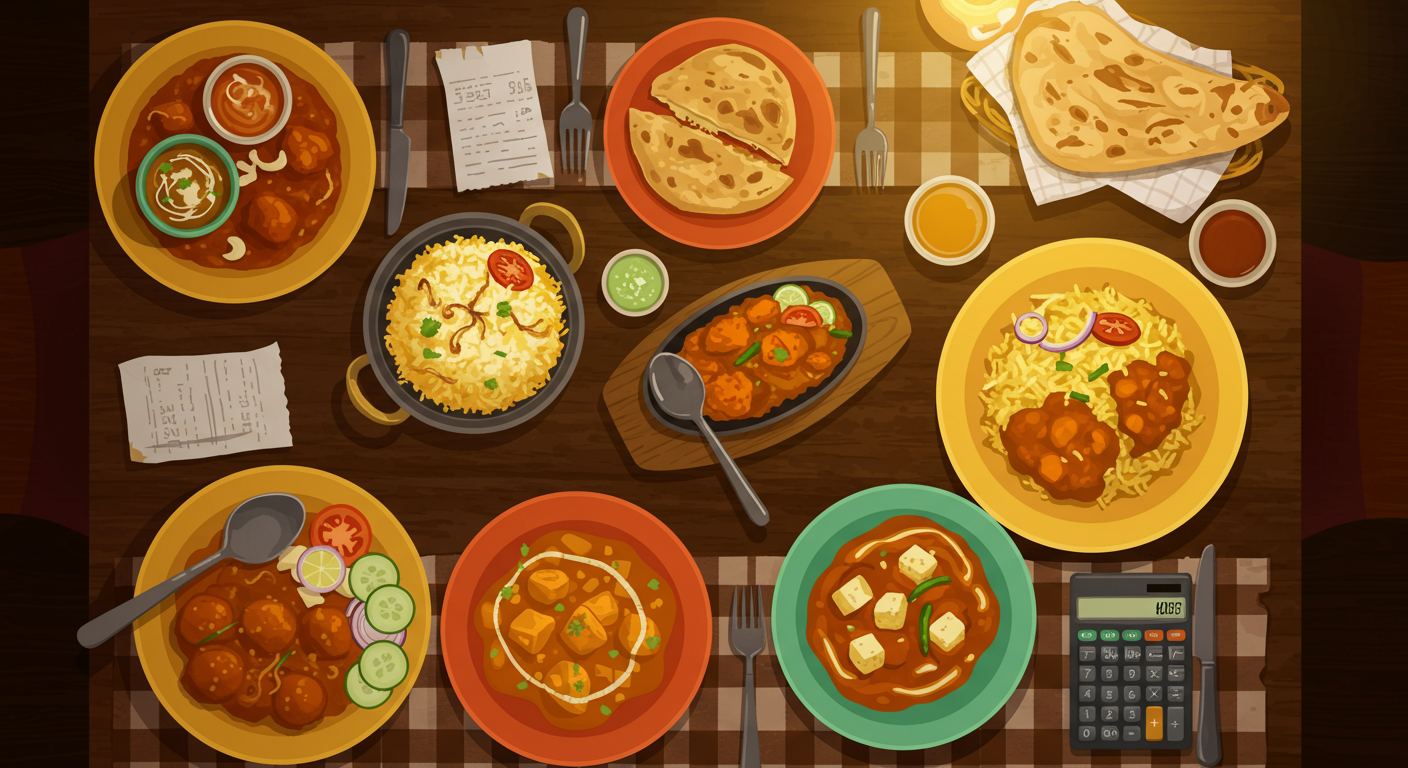
The Contested Calculation "I only had the veg thali, why am I paying the same as everyone?" "But we agreed to split equally." "No we didn't." Nobody wrote it down and now it's a whole thing.
The Two Things That Prevent 90% of Money Fights
Research on financial conflict in relationships consistently points to two root causes: lack of transparency and disagreement on the rules. Fix both, fix most problems.
- Transparency — everyone should be able to see all expenses at any time, not just at settlement time
- Prior agreement — the split method is decided before the expense happens, not after
Niptao enforces both by design. Every expense logged is visible to everyone in the group. The split method is chosen at logging time. There's no "I didn't know about that expense" or "we never agreed on that" — it's all in the record.
Practical Rules for Money-Peaceful Group Living
Talk About Money Before Moving In Together
The most financially harmonious flat shares start with a frank conversation before anyone signs the lease:
- How is rent split? (Equal or by room size?)
- How do groceries work? (Shared pool, individual, or hybrid?)
- When do we settle? (Monthly on the 1st? Weekly?)
- What counts as a shared expense — and what doesn't?
Yes, this conversation is slightly awkward. It's still 100x better than having it after three months of built-up resentment.
Use our Rent Split Calculator to figure out a fair starting point before you even have the conversation — numbers make it less personal.
Settle Frequently, Not Eventually
The longer debts accumulate, the bigger they get — and the more emotionally loaded the settlement becomes. ₹400 owed from last week feels neutral. ₹8,000 accumulated over three months feels like an accusation.
The rhythm that works:
- Flatmates: Monthly, on the 1st
- Trips: Before everyone disperses at the end
- Office lunch pools: Weekly
- Casual outings: Same night or next day
Never Let One Person Always Pay
Rotate who pays for group expenses. Even if the person who always fronts the money gets reimbursed eventually, there's a psychological burden to carrying the group's tab. It creates an invisible power imbalance.
Niptao makes rotation easy — the balance dashboard shows who's been paying more, so the group can naturally calibrate.
Speak Up at Round One, Not Round Ten
If you notice something feels unfair — you've been covering more of the groceries, you always pay for the Ola, nobody ever covers your chai — say something the first time you notice it.
"Hey, I've been paying more of the groceries lately — can we recalibrate?" is a 10-second conversation.
"I've been paying more than everyone for months and I'm honestly really frustrated" is a 45-minute argument that damages the friendship.
Use a Standing Group, Not WhatsApp Notes
WhatsApp notes get buried. Excel sheets get forgotten. Verbal agreements get misremembered. A shared expense tracker with a permanent record removes the memory argument entirely.
Create a standing Niptao group for your flatmates, your regular friend crew, or your office lunch circle. Every expense goes in. Nobody has to remember anything.
When a Dispute Still Happens
Even with the best systems, conflicts happen. Here's how to handle them:
Look at the data first. Before anyone claims "I've been paying more than you," open Niptao and check the actual numbers. This immediately defuses disputes based on faulty memory — because one of you is misremembering, and the record doesn't lie.
Stay in the math, not the emotion. "According to the records, you owe ₹1,200" is a factual statement. "You never pay your share" is an accusation. Keep the conversation in factual territory.
Find the root cause. Is the dispute about this specific ₹1,200, or is there a systemic imbalance that needs a system reset? Address both — the immediate amount AND the underlying pattern.
Do a clean reset when needed. Sometimes the best resolution is a fresh start — settle all current balances and agree on clearer rules going forward. Niptao's history makes it easy to close out one chapter and start the next one clean.

The Real Cost of Letting It Fester
Financial disputes are consistently among the top reasons friendships deteriorate and flatmate situations collapse. And the irony is brutal — the amounts are usually small. It's the principle of unfairness, the accumulation of small resentments, and the avoidance of a simple conversation that do the real damage.
A transparent expense tracker that takes 15 seconds per entry and settles via UPI is genuinely cheap relationship insurance.
Quick Comparison: Old Way vs Niptao
| Situation | WhatsApp Notes | Niptao |
|---|---|---|
| Who paid last time? | Nobody remembers | App shows history |
| Disputed amount | Arguments | Receipt attached |
| Settling | Awkward reminders | UPI tap, done |
| One person always paying? | Invisible problem | Balance dashboard shows it |
| New flatmate joins | Complicated | Add to group, fresh start |
The goal isn't to make money the center of your friendship — it's to handle it so smoothly that it never becomes a thing.
Ready to niptao karo? Create a free group on Niptao and settle via UPI in seconds.
Ready to try Niptao?
Free bill splitting with UPI settlement. No credit card needed.
Get started free →