How to Split Rent With Flatmates in India: 4 Methods Compared (2026)
The definitive guide to splitting rent fairly in Indian cities. Equal split, room-size weighted, income-based, and amenity-based methods — with real examples and a free calculator.

"Let's just split equally" sounds fair until you realize one person has the master bedroom with an attached bathroom and a balcony, while you're in the windowless box next to the kitchen.
Rent splitting is the #1 financial decision in any Indian flat-share, and getting it wrong creates resentment that festers for months. This guide covers every method, with real numbers, so you can pick what works for your situation.
The 4 Methods (Quick Comparison)
| Method | Fairness | Simplicity | Best For |
|---|---|---|---|
| Equal Split | ⭐⭐⭐ | ⭐⭐⭐⭐⭐ | Identical rooms |
| Room-Size Weighted | ⭐⭐⭐⭐⭐ | ⭐⭐⭐ | Different room sizes |
| Income-Based | ⭐⭐⭐⭐ | ⭐⭐ | Close friends with income gap |
| Amenity-Based | ⭐⭐⭐⭐ | ⭐⭐⭐ | Rooms with different features |
Method 1: Equal Split
The default. Divide total rent by number of people.
Example: ₹36,000 rent ÷ 3 flatmates = ₹12,000 each
When to use it:
- All rooms are roughly the same size
- Nobody has a significantly better room
- The group values simplicity over perfect fairness
When NOT to use it:
- One room is clearly larger or has an attached bathroom
- Someone has a room with a balcony or AC while others don't
- There's a significant size difference (>20%)
Reality check: Most Indian flats have unequal rooms. If you're using equal split despite this, someone is overpaying. They might not say anything now, but they will eventually.
Method 2: Room-Size Weighted Split (Recommended)
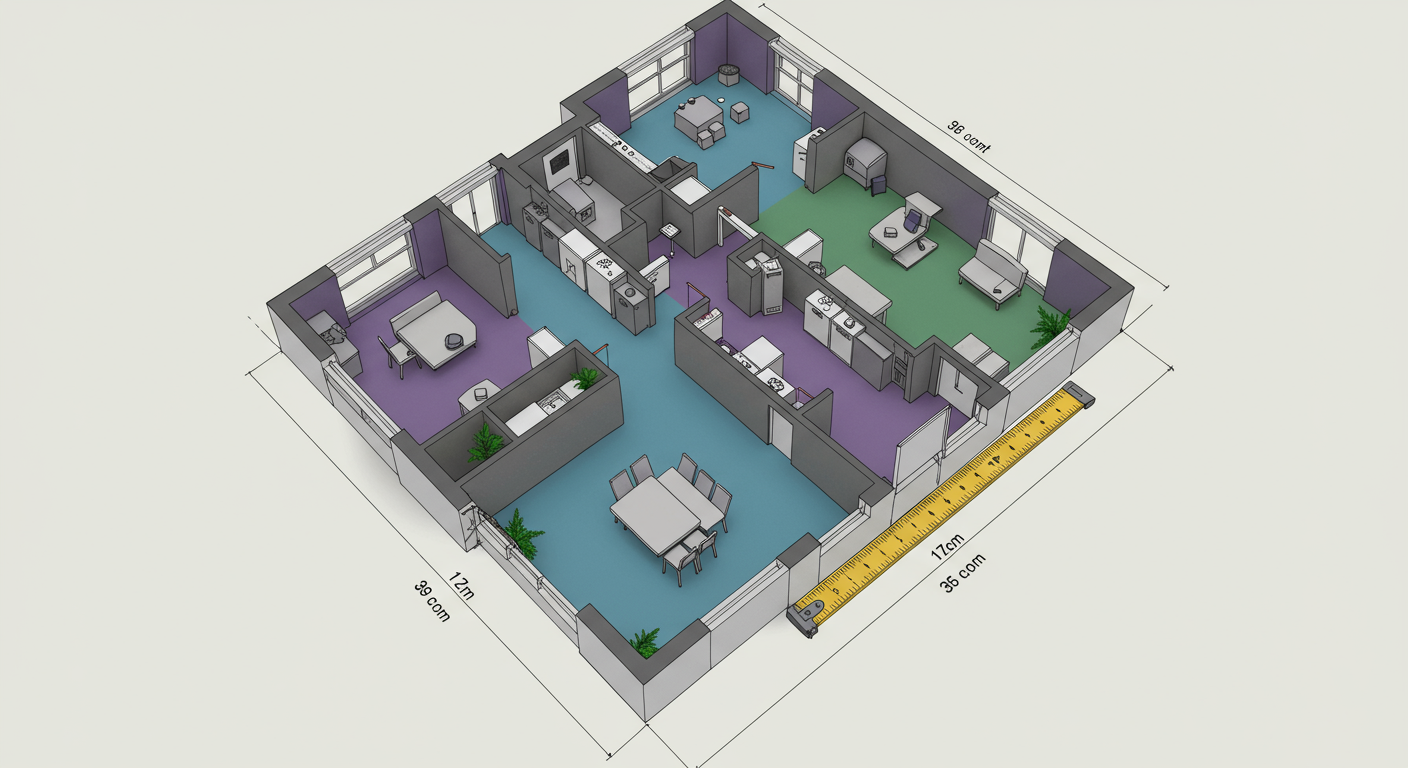
This is the most objectively fair method. Each person pays based on the space they use.
The Formula
- Measure each bedroom in square feet
- Calculate common area (living room, kitchen, bathrooms) and divide equally
- Each person's share = (their room + their share of common area) ÷ total area × rent
Real Example
Flat: 1,000 sq ft, 3BHK, ₹36,000/month rent
| Space | Size | Assigned To |
|---|---|---|
| Room A (master + attached bath) | 220 sq ft | Rahul |
| Room B (medium) | 160 sq ft | Priya |
| Room C (small) | 120 sq ft | You |
| Common areas | 500 sq ft | Shared equally |
Calculation:
| Person | Room | + Common (500÷3) | = Total | % of Area | Monthly Rent |
|---|---|---|---|---|---|
| Rahul | 220 | 167 | 387 | 38.7% | ₹13,920 |
| Priya | 160 | 167 | 327 | 32.7% | ₹11,760 |
| You | 120 | 167 | 287 | 28.7% | ₹10,320 |
The difference between the highest and lowest is ₹3,600/month — that's ₹43,200 per year. Significant enough to get right.
On Niptao: Select "Percentage" split and enter 38.7%, 32.7%, 28.7%. Set it once, use it every month.
Use our free Rent Split Calculator to compute this instantly.
Method 3: Income-Based Split

Some friend groups, particularly close friends or family, prefer to split based on earning capacity.
Real Example
Three flatmates with different salaries sharing a ₹36,000 flat:
| Person | Monthly Salary | % of Total Income | Monthly Rent |
|---|---|---|---|
| Amit | ₹1,00,000 | 50% | ₹18,000 |
| Priya | ₹60,000 | 30% | ₹10,800 |
| You | ₹40,000 | 20% | ₹7,200 |
When it works:
- Close friends who are comfortable sharing salary info
- Significant income disparity (2x+)
- The group values equity over strict equality
When it backfires:
- People feel judged by their salary
- Salary changes create awkward renegotiations
- The highest earner starts feeling exploited
Honest take: This works in theory but creates weird dynamics in practice. Room-size splitting is usually a better foundation, with income-based adjustments only for extreme cases.
Method 4: Amenity-Based Negotiation

Some rooms have features worth paying extra for. Instead of complex formulas, negotiate flat premiums.
Common Indian Flat Amenities and Their Premiums
| Amenity | Typical Premium | Notes |
|---|---|---|
| Attached bathroom | ₹1,500 - ₹3,000 | The biggest differentiator |
| Balcony | ₹500 - ₹1,500 | Especially in cities with decent weather |
| AC (pre-installed) | ₹500 - ₹1,000 | Plus higher electricity share |
| Better natural light | ₹500 - ₹1,000 | Subjective but real |
| Quieter room | ₹500 - ₹1,000 | Away from road/kitchen |
| Larger closet | ₹200 - ₹500 | Often overlooked |
Example:
Base rent: ₹36,000 ÷ 3 = ₹12,000 base per person
| Room | Base | Amenity Premiums | Total |
|---|---|---|---|
| A (attached bath + balcony) | ₹12,000 | +₹2,500 + ₹1,000 = +₹3,500 | ₹15,500 |
| B (larger closet) | ₹12,000 | +₹300 | ₹12,300 |
| C (standard) | ₹12,000 | -₹3,800 discount | ₹8,200 |
The premiums paid by A and B subsidize a discount for C. Everyone gets a deal that matches what they actually get.
The Security Deposit Problem

In Indian cities, security deposits range from 2 months (Bangalore, Pune) to 6-10 months (Mumbai). This is often ₹50,000-3,00,000 — too much for one person to front.
How to handle it:
- Each person pays their proportional share upfront — if your rent share is 35%, you pay 35% of the deposit
- Log it in Niptao as a one-time expense — this ensures it's tracked and settled when someone moves out
- Document the deposit receipt — attach a photo of the receipt in the expense
When the flat is vacated and the deposit is returned, log it as income in Niptao. The app calculates who gets what.
When Someone Moves In or Out
This is where most flatmate finance systems break down.
Someone moves out mid-month:
- Calculate their share for the days they were present: (days ÷ 30) × monthly share
- Use "Exact amount" split in Niptao for that month
- Settle all outstanding balances via UPI before they leave
- Remove them from the group
New person moves in:
- Add them to the Niptao group
- Pro-rate their first month: (remaining days ÷ 30) × monthly share
- Collect their share of the security deposit
- Brief them on the split methodology
Critical rule: Settle with the departing person before they leave. Chasing someone for money after they've moved to another city is nearly impossible.
The Day-1 Agreement
The single most important thing you can do: agree on the split methodology on the day you move in. Not the second month. Not "when we figure it out." Day. One.
Here's what to agree on:
- Rent split method — equal, room-size, or amenity-based?
- How to handle utilities — equal split or usage-based?
- Settlement frequency — monthly, on a specific date
- Carry-forward threshold — ignore balances under ₹200?
- What counts as "shared" vs. "personal" — groceries yes, protein powder no
- Security deposit split — proportional to rent share?
Create a Niptao group and set up the first month's expenses on that same day. Five minutes of setup prevents twelve months of arguments.
City-Specific Rent Realities
| City | 2BHK Average | 3BHK Average | Deposit |
|---|---|---|---|
| Mumbai | ₹30,000 - ₹55,000 | ₹45,000 - ₹80,000 | 2-3 months |
| Bangalore | ₹18,000 - ₹35,000 | ₹25,000 - ₹50,000 | 10 months (yes, really) |
| Delhi NCR | ₹15,000 - ₹30,000 | ₹20,000 - ₹45,000 | 2-3 months |
| Pune | ₹12,000 - ₹25,000 | ₹18,000 - ₹35,000 | 2-3 months |
| Hyderabad | ₹12,000 - ₹22,000 | ₹16,000 - ₹30,000 | 2 months |
| Chennai | ₹12,000 - ₹25,000 | ₹18,000 - ₹35,000 | 3 months |
Bangalore's 10-month deposit culture is legendary. Split that deposit fairly or face a ₹2,00,000+ headache.
Try our Rent Split Calculator to compute your exact split based on room sizes, amenities, or any custom method.
Set It Up Now
- Open niptao.app
- Create a "Flat" group
- Add your flatmates
- Set up the rent as a monthly expense with your agreed split
- Add your first utility bills
It's free. No premium, no ads. Just clean rent tracking with UPI settlement. Niptao karo. 🏠
Fair rent, zero fights. Create your Flat group on Niptao and set up your rent split in 2 minutes.
Ready to try Niptao?
Free bill splitting with UPI settlement. No credit card needed.
Get started free →