Sangeet Night Expense Pool India 2026: Split Without Drama
How Indian friend + cousin groups actually pool sangeet costs in 2026 — venue, DJ, choreographer, costumes. Common-pot vs split-cost models with a worked example.
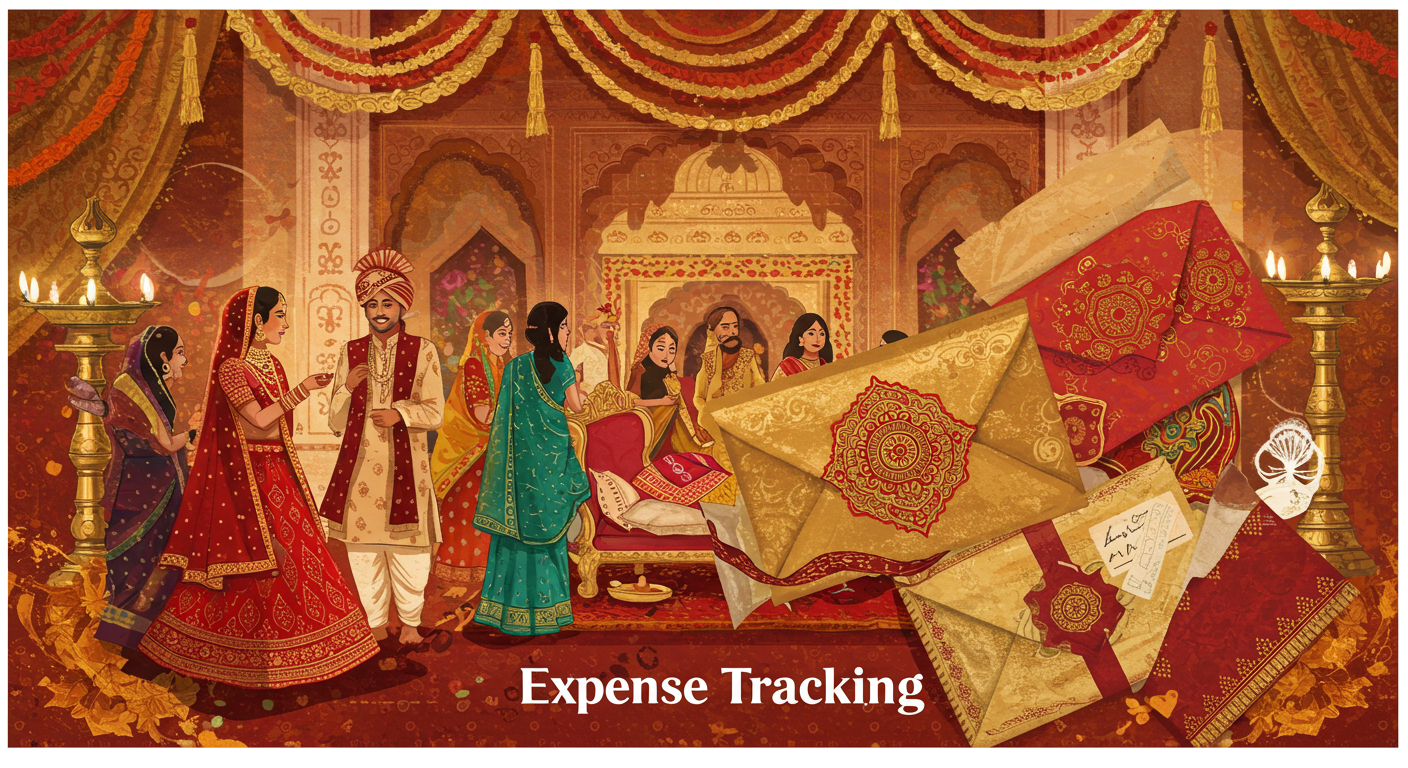
It starts in a cousin WhatsApp group three months before the wedding. "Guys, we need to start sangeet practice." Twelve emojis later, someone shares a Pinterest moodboard. Someone else volunteers their friend who choreographs Bollywood routines in Andheri. By the next weekend you're on a Zoom call deciding song order, and somebody quietly says "so how are we splitting the choreographer fee?"
That's the moment the sangeet stops being fun and becomes a finance question.
The good news: Indian sangeet groups have figured out repeatable patterns. The bad news: most groups still discover them by getting it wrong the first time. This guide compresses the lessons.
What a sangeet actually costs (2026, mid-tier urban Indian wedding)
The sangeet sits in an awkward middle category — bigger than mehendi, smaller than the reception. Costs split across the couple's family budget and the performers' pool (cousins, college friends, bridal party). The performers' pool is what this post is about.
| Line item | Typical cost (mid-tier) | Who pays |
|---|---|---|
| Venue (banquet hall, 200 cap, 5 hrs) | ₹80,000–₹2,50,000 | Couple's family |
| DJ + sound + lights | ₹35,000–₹1,20,000 | Couple's family |
| Catering (200 pax, dinner + drinks) | ₹2,00,000–₹6,00,000 | Couple's family |
| Decor (floral + LED + stage) | ₹50,000–₹2,50,000 | Couple's family |
| Choreographer (3–5 routines, 6–8 sessions) | ₹25,000–₹80,000 | Performers' pool |
| Costumes for group performances | ₹2,500–₹8,000 per person | Individuals / pool |
| Practice studio rental | ₹3,000–₹12,000 total | Performers' pool |
| Special props (matching sunglasses, dupattas, swords for bhangra) | ₹500–₹2,000 per person | Pool |
| Post-practice food / drinks (cumulative across 6 weekends) | ₹6,000–₹25,000 total | Pool |
The performers' pool is where 90% of "who's paying for what?" awkwardness lives. The couple isn't usually involved here — it's friend/cousin internal math.
Two models: common pot vs split-cost
Model A — Common pot (best for tight cousin groups)
Everyone contributes a fixed amount upfront (₹3,500–₹7,000 per person, depending on city), and one person or a small committee runs the pool. All choreographer fees, studio bookings, prop purchases, post-practice biryani — paid from the pot. At the end, any surplus refunds out; any shortfall asks for a top-up.
Works when: the group trusts each other, sizes are 8–16 people, and one person can credibly hold the pool without it becoming political.
Fails when: members drop out mid-practice (and want a refund), or someone wants to upgrade their costume independently, or pot-holder forgets to log a ₹2,400 expense.
Model B — Split-cost ledger (best for 15+ person groups or mixed friend circles)
Every shared expense is logged with who paid. Costumes are personal (each person buys their own). Choreographer fee is split equally. Studio rentals split equally. Snacks during practice split equally. At the end, debts simplify down to a few UPI transfers.
This is essentially how every modern bill-splitting app — including Niptao — handles it. The ledger is shared, transparent, and forgiving when someone joins late or skips a session.
Works when: group is 15+ people, members are mixed (some close, some periphery), or attendance is irregular.
Fails when: nobody bothers to log expenses and you end up with "Anjali paid for the props two months ago, what did that cost again?"
Worked example — 12-person cousin sangeet pool, Hyderabad wedding
The group does 3 routines, practices on 6 weekends, and performs at a banquet hall in Banjara Hills.
| Item | Total | Split | Per-person share |
|---|---|---|---|
| Choreographer (₹6,000/session × 8) | ₹48,000 | 12 ways | ₹4,000 |
| Studio rental (3 weekends, ₹2,500/day) | ₹7,500 | 12 ways | ₹625 |
| Matching gold dupattas (girls' segment, 7 people) | ₹17,500 | 7 ways | ₹2,500 |
| Matching sherwanis (boys' segment, 5 people, rented) | ₹14,000 | 5 ways | ₹2,800 |
| Props (LED sticks + roses for finale) | ₹3,600 | 12 ways | ₹300 |
| Post-practice food x6 weekends | ₹14,400 | 12 ways | ₹1,200 |
| Last-minute Amazon order (hair gels, makeup, fake mustache for groom skit) | ₹2,800 | 12 ways | ₹233 |
| Cousin avg total | ₹6,358 (girls) / ₹6,658 (boys) |
If the cousin group used common-pot: pre-collect ₹6,500 from each, run the show, refund or top-up ₹200–₹500 at the end.
If the cousin group used split-cost ledger: log each line as it happens, simplify at the end, settle in 3–4 UPI transfers.
A cousin wedding in Delhi or Mumbai pushes per-person numbers 20–30% higher; in Tier-2 cities (Indore, Vizag, Chandigarh), 20–30% lower.
The choreographer question
The single biggest sangeet expense for the performers' pool is almost always the choreographer. 2026 rates (in metros):
- Friend who's just been in dance class (informal): ₹3,000–₹8,000 flat or as a thank-you gift
- YouTube-tutorial-based group leader from within the family (no fee): unofficial, often the most fun
- Freelance choreographer who does weddings on weekends: ₹4,500–₹8,000 per session (4–8 sessions typical)
- Established wedding choreography studio (Mumbai/Delhi): ₹40,000–₹1,20,000 for the full package — concept, music edit, 8 sessions, day-of direction
Splitting this cost equally is standard. Don't try to weight by "how prominent your role is in the routine" — that conversation breaks groups.
Costumes: the "do I count this in the pool?" question
The short answer: costumes are individual unless the group explicitly decided to match. If the girls' segment requires gold dupattas the same shade, that's a pool expense (split among the dupatta-wearers). If you bought a personal lehenga because you wanted to, that's yours.
Common matching patterns:
- Coordinating colour palette (everyone wears blush pink/maroon): each person buys their own, no pool involved
- Identical item (same kurta from the same vendor): pool expense, split among wearers
- Rented sherwanis from one vendor: pool, split among wearers
Spend per person ranges ₹2,500–₹8,000 for new outfits, ₹1,500–₹3,500 for rentals.
When the couple wants to chip in
Sometimes the bride/groom offers to cover the choreographer fee. Conventional answer: politely decline. The whole point of the cousin/friend sangeet pool is "this is our gift to you, we figured it out." Letting the couple pay defeats it.
Exception: if the choreographer is a vendor the couple's wedding planner already booked for the family routines, the planner sometimes folds the friend routine into the same package — that's fine, no separate pool needed.
The "pre-practice cocktail" expense (be honest about it)
Six weekends of sangeet practice means six weekends of post-practice food + (often) drinks. By weekend three, cumulative spend is meaningful — ₹6,000–₹25,000 across the group. Log it as a recurring pool expense from day one; don't pretend it's "just snacks" until the bill at the end is ₹14,000.
A useful pattern: one person runs the food order each weekend, the pool reimburses them, the next weekend rotates. Stops "Riya always pays for everything" syndrome.
FAQ — Sangeet expense pool
How much should each cousin contribute to a sangeet pool in 2026? For a mid-tier wedding in a metro, ₹5,000–₹8,000 per person covers the typical choreographer + studio + props + group meals. Tier-2 cities and smaller groups can come in at ₹3,000–₹5,000. The variance comes from choreographer rates and how elaborate the costumes are.
Should the bride/groom contribute to the performers' pool? Usually no. The convention is the cousins/friends fund the sangeet performance as their gift to the couple. The couple's family covers the venue, catering, decor, and DJ — that's the actual event budget. Exception: if a cousin can genuinely not afford it, the couple often quietly covers them.
Common pot or per-expense split — which is better? Common pot for tight cousin groups (8–16 people) where one person can credibly run the pool. Per-expense split for larger or mixed groups, or when attendance is irregular. The split ledger is more transparent but requires consistent logging; the common pot is simpler but relies on trust.
How do we handle someone who drops out mid-practice? Refund their contribution proportionally — they should pay for sessions attended + a small share of fixed costs (studio booking, costume deposit). Common pattern: refund 60–80% if they drop out before the third weekend, 30–50% after. The conversation is easier if you've been logging cleanly.
Who pays for the choreographer? The performers' pool, split equally among all performers. Don't weight by "screen time" or how many routines someone is in — that conversation creates resentment. If a non-performer cousin wants to chip in voluntarily as a gift, fine, but don't expect or solicit it.
What's a fair choreographer rate to budget for? ₹25,000–₹80,000 for the full package in 2026 metros — 4–8 sessions plus day-of direction. Freelancers run ₹4,500–₹8,000/session; established wedding-choreography studios in Mumbai/Delhi quote ₹60,000–₹1,20,000 all-in. YouTube-led self-choreography is free but expect more chaos on the night.
Sources & methodology
- Cost ranges derived from observed wedding choreography quotes in Mumbai, Delhi-NCR, Hyderabad, and Bengaluru across 2024–2026.
- Venue/catering numbers are common knowledge wedding-industry estimates; out of scope for performer-pool math.
- Costume rental rates from observed Karol Bagh / Linking Road / Commercial Street vendor patterns. Treat all numbers as directional.
Keep reading
- Mehendi & haldi cost sharing India 2026 — the smaller ceremonies and how cousin groups split them
- Wedding contribution etiquette India 2026 — what to actually put in the shagun envelope
Ready to try Niptao?
Free bill splitting with UPI settlement. No credit card needed.
Get started free→